
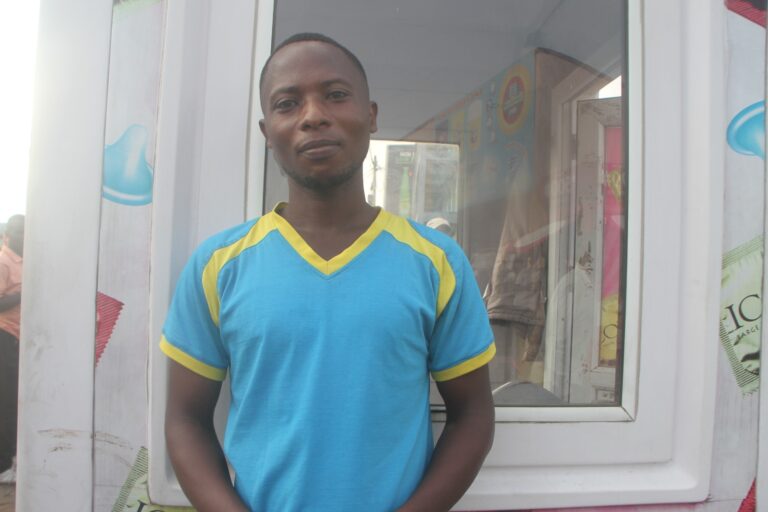
RUBAVU: As Rwanda intensifies its efforts to combat and prevent new HIV/AIDS infections across the country, various health related institutions continue to provide free condoms at health centers and public gathering places, in Rubavu District, sex workers in particular acknowledge that the installation of free condom dispensers commonly known as kiosks has significantly contributed to HIV/AIDS prevention efforts.
This feedback emerged during a recent awareness campaign organized by the Rwanda Health Journalists Network focusing on HIV (ABASIRWA) in collaboration with the Private Sector Federation (PSF). The campaign included visits to hotels, guest houses, and other public places offering tourism services, with the aim of promoting condom use as an effective HIV/AIDS prevention method.
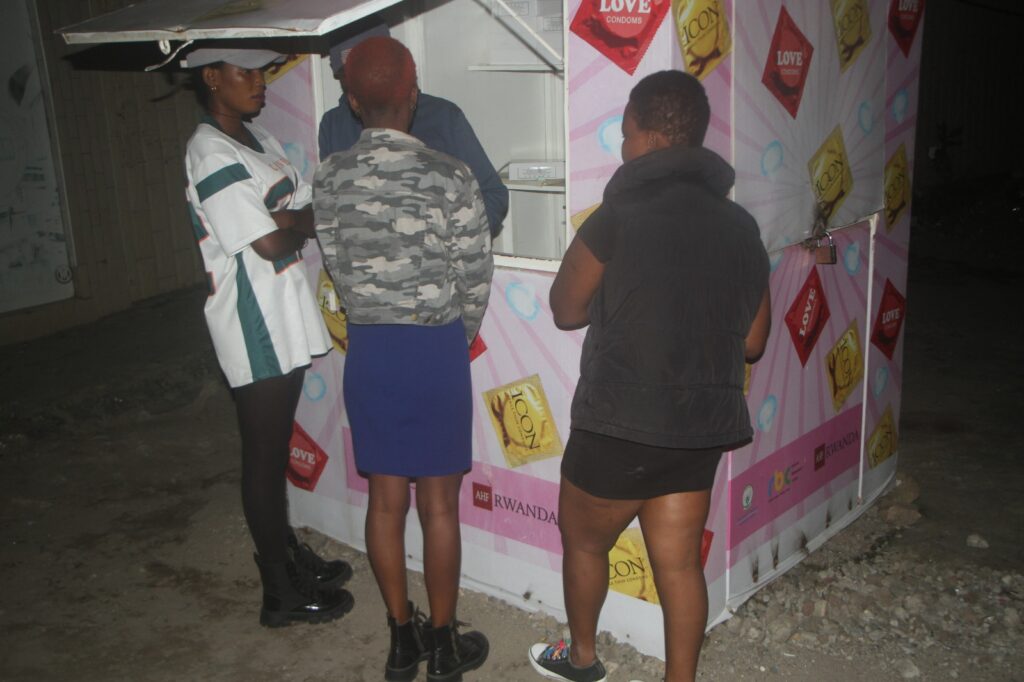
Sex workers and members of the general public attest that these kiosks are playing a critical role in curbing the spread of HIV. They are calling for the installation of more kiosks in other busy areas where they are not yet available.
Claudine (not her real name), a sex worker in Gisenyi town, said: “These condom kiosks help us a lot. When we get a client, we can quickly access condoms without having to buy them. This protects us from contracting HIV, other sexually transmitted infections, and unwanted pregnancies. I don’t hesitate to pick up condoms because I care about my life. I also encourage others to use them. I am not ashamed to ask for condoms because I know the kind of work I do”
Another sex worker added: “This kiosk is very useful because it provides us with easy access to condoms. Condoms are very effective in preventing both pregnancies and various infections, including HIV and other STIs. Many people come here secretly to take them, but it’s okay to come even during the day.” Beyond sex workers, other community members also praise the initiative, emphasizing the need to expand the presence of these kiosks.
Christophe, a resident of Rugerero Sector, said: “These condom kiosks are really important. We need one here in Buhuru too. I see no problem in asking for a condom because it helps prevent infections and unintended pregnancies.”

Jean D’Amour Niragire, a staff member at AHF Rwanda responsible for distributing condoms at the kiosk near Petite Barrière, stated: “Everyone is welcome, youth, employed or unemployed. Our services are free. We give out free condoms because our goal is to ensure that everyone enjoys a healthy life, free from HIV.”
Jolie Bashagire, in charge of health promotion and advocacy for infectious and non- communicable diseases at PSF, said the private sector is committed to raising more awareness to encourage Rwandans to embrace condom use, especially when engaging in sexual activity with partners whose HIV status is unknown.
“Using a condom is not mandatory, but it is highly recommended because HIV still exists, and new infections are on the rise. Our role as PSF is to continually conduct public awareness campaigns. We don’t stop because this is an ongoing issue. Our cultural beliefs and religious doctrines can hinder condom use, so consistent education is key,” she said.
She added that PSF, in collaboration with other stakeholders, will do its best to expand the availability of free condom kiosks in high-traffic areas. During the commemoration of World AIDS Day on December 1, 2024, Rwanda’s Minister of Health, Dr. Sabin Nsanzimana, highlighted the growing concern that both youth and adults are engaging in unprotected sex, which contributes to the rise in new HIV infections.
“Many people are having unprotected sex, not just youth but also older adults. This increases the risk of contracting HIV, and remember, there is still no cure or vaccine for AIDS,” he said.
He urged both young people and adults to take responsibility for their health and use condoms if abstinence is not an option.
“Dear youth, HIV is still with us. Use a condom or abstain from sex,” he warned.
Statistics from the Rwanda Biomedical Center (RBC) show that, on average, nine new people contract HIV in Rwanda every day. Additionally, 7 out of every 100 daily deaths in the country are attributed to AIDS, with an estimated 2,600 deaths annually.