
By Gilbert Mahame
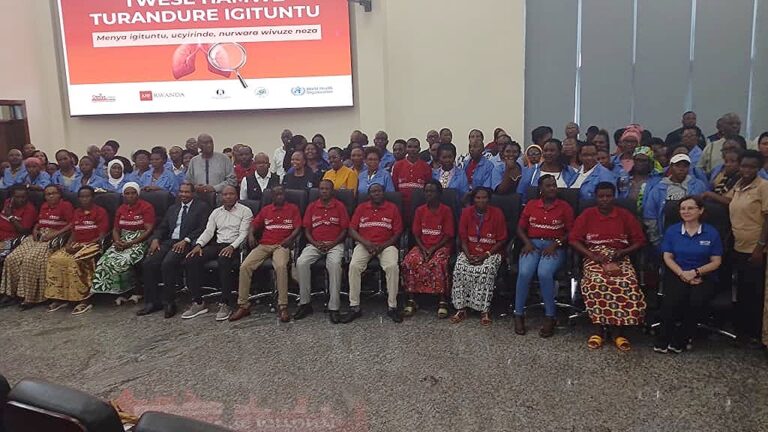
As on this March 24, 2026, Rwanda joined the rest of the world to mark World Tuberculosis (TB) Day, strong calls were made for collective action, urging every citizen to take responsibility in the fight against tuberculosis to achieve its elimination by 2035.
The commemoration, held under the theme “Yes! We Can End TB: Commit, Invest, Deliver” nationally aligned as “Together we can end TB”, highlighted that defeating the disease is not solely the responsibility of the health sector, but a shared duty requiring the involvement of all Rwandans.
Rwanda has made notable progress over the past two decades. TB incidence has significantly declined from 238 cases per 100,000 people in 2000 to 62 in 2024. Deaths linked to the disease have also dropped sharply, from 77 per 100,000 to just 3.4 in the same period.
Despite these gains, health officials caution that the fight is far from over. Limited public awareness remains a key challenge, with recent data indicating that only 68% of the population has adequate knowledge about TB transmission, symptoms, and prevention.
Dr. Habimana Mucyo Yves, Acting Division Manager for TB and other respiratory communicable diseases at the Rwanda Biomedical Centre (RBC), emphasized that continued progress depends on individual commitment.
“Every Rwandan has a crucial role in eliminating tuberculosis because it is preventable and curable, especially when patients adhere to treatment and complete their medication on time,” he said.
He further stressed the importance of early diagnosis in reducing new infections. “Seeking medical attention early when symptoms appear, and adhering to treatment, protects not only the patient but also the community,” he added.
Dr. Tuyishime Albert, Head of the Disease Prevention and Control Division at RBC and Guest of Honor at the event, reiterated the urgency of collective responsibility in achieving the 2035 elimination target.
“March 24 is not a day of celebration, but a day of reflection. Celebrating TB would mean accepting its existence. Instead, we must reflect on what more needs to be done to fight it effectively,” he said.
He noted that TB remains among the top ten leading causes of death globally, warning that every life lost represents a significant and preventable tragedy.
“Even losing one or two people is a major loss. Falling ill or dying from a disease that can be prevented and cured is a loss we should not accept,” he said.
Dr. Tuyishime called on all stakeholders to strengthen their efforts, stressing that gaps in performance must be addressed.
“If we are not achieving 100% success, it means there are areas where we are falling short. Everyone, in their role, has a responsibility to contribute to ending TB,” he added.
He also highlighted the critical role of community health workers, describing them as the backbone of early detection and patient follow-up.
“Community health workers are essential in identifying suspected TB cases and linking patients to care. Their contribution is extremely valuable,” he noted.
While Rwanda has achieved a treatment success rate exceeding 90%, officials say more effort is needed to reach full coverage and eliminate the disease entirely.
The government has continued to strengthen interventions, including providing free TB treatment, expanding access to rapid diagnostic technologies, and intensifying public awareness campaigns.
Dr. Brian Chirombo, World Health Organization (WHO) Representative in Rwanda, commended the country’s progress but warned that TB remains a global health threat.
“Tuberculosis is not just a medical issue, but a societal challenge that requires unity, compassion, and action from everyone,” he said.
He added that Rwanda stands out as a model in TB control. “Rwanda has reduced TB-related deaths by 64%. This success is the result of strong leadership and active community involvement,” he said.
At the local level, Gasabo District Executive Administrator, Bayasese Bernard, called for sustained awareness efforts and improved service delivery.
“I urge health workers to continue providing quality services and educating citizens on prevention and early treatment,” he said, adding that community engagement remains vital.
“Together, we can eliminate tuberculosis and ensure a healthier population,” he emphasized.
Testimonies from survivors also underscored the importance of early care and adherence to treatment. One former patient shared how timely intervention and support from community health workers helped them recover.
“I went to a health center, got tested, and was diagnosed with TB. I started treatment and followed it properly… today I am fully recovered,” the survivor said.
Health authorities continue to urge the public to seek medical attention if they experience a persistent cough lasting two weeks or more, one of the key symptoms of TB.
As Rwanda continues its journey toward eliminating tuberculosis, the message remains clear: sustained progress will depend on collective action, awareness, and a shared commitment to protect lives. (End)